About the author
Lauren Dobischok

Sexually transmitted infections (STIs) can present themselves in a variety of ways in women, and sometimes do not cause any symptoms at all. Symptoms that do appear can be vague or easily confused with other conditions, like urinary tract or yeast infections. Despite having fewer noticeable symptoms, untreated STIs in women can have serious health effects, such as chronic pain or infertility. That is why regular STI testing is an important part of women’s health, even if you are experiencing mild or no symptoms. If detected in a timely manner, most STIs are easily treatable and have no long-term health effects. This article summarizes the most common STI symptoms in women.
Chlamydia is the most common STI in the Netherlands, especially among people under 25. For women, chlamydia often causes no symptoms. In women, when symptoms occur, they may include:
Chlamydia is easily treated with antibiotics. Untreated chlamydia can spread to the fallopian tubes and increase the risk of infertility or ectopic pregnancy.
Source: NVDV, 2026
Want to get tested? Gain peace of mind by checking for chlamydia from home using Homed-IQ’s Chlamydia Test.
Gonorrhoea is a common bacterial STI caused by a bacterium Neisseria gonorrhoeae. In women, gonorrhoea may cause no symptoms. In woman, possible signs include:
It is easily treated with antibiotics. Untreated gonorrhea can increase the risk of infertility, ectopic pregnancy, premature birth, and infection in the baby during delivery.
Source: NVDV, 2026
Trichomoniasis is a common STI caused by a parasite. In women, it may cause no symptoms. When symptoms occur, they may include:
Trichomoniasis can be treated with antibiotics. Serious complications are rare, but it may increase the risk of HIV transmission and pregnancy complications, including premature birth.
Source: NVDV, 2026
Syphilis is a bacterial STI caused by Treponema pallidum. It is an STI that develops in stages, and symptoms may not always be noticeable. Possible signs include:
Without treatment, syphilis can remain in the body for years and may eventually damage the heart, brain, spinal cord, bones, and other organs. Syphilis is treated with antibiotics.
Source: NVDV, 2026
Human Immunodeficiency Virus (HIV) is a virus that weakens the immune system and can lead to AIDS if untreated. While some people have no symptoms for a long time, possible symptoms include:
It cannot be cured, but effective medication can suppress the virus and protect your health. Without treatment, HIV can severely weaken the immune system and lead to serious infections or certain cancers.
Source: NVDV, 2026
Hepatitis B is a liver infection caused by the hepatitis B virus. Many people have no symptoms. When symptoms occur, they may include:
Acute hepatitis B often clears on its own within six months. If the infection lasts longer then six months, it becomes chronic and can lead to long-term liver problems. Hepatitis B can be treated with medication that slows down the virus.
Source: NVDV, 2026
Herpes is a common infection caused by the herpes simplex virus (HSV). HSV-1 usually affects the lips and face, while HSV-2 more commonly affects the genital area. Many people have no symptoms. When symptoms occur, they may include:
Herpes on the lips
Herpes of the penis, vagina, or anus
Herpes on other parts of the body
Once infected, the virus remains in the body and can become active again, for example during stress, illness, menstruation, or strong sun exposure. There is no cure for herpes, but medication can reduce symptoms and shorten outbreaks.
Source: NVDV, 2026
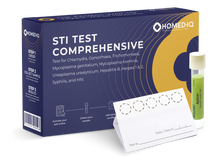
Would you like to perform a complete STI test panel from the comfort of home? Homed-IQ’s STI Test Comprehensive is a home test for the most common STIs, with laboratory-certified results available in a few days.
At-home testing with laboratory accuracy
Our medical laboratories operate according to strict European quality standards. All tests are analysed by ISO-certified partner labs, giving you reliable and professional results. With the comfort of your home.